
House Underpinning in NZ
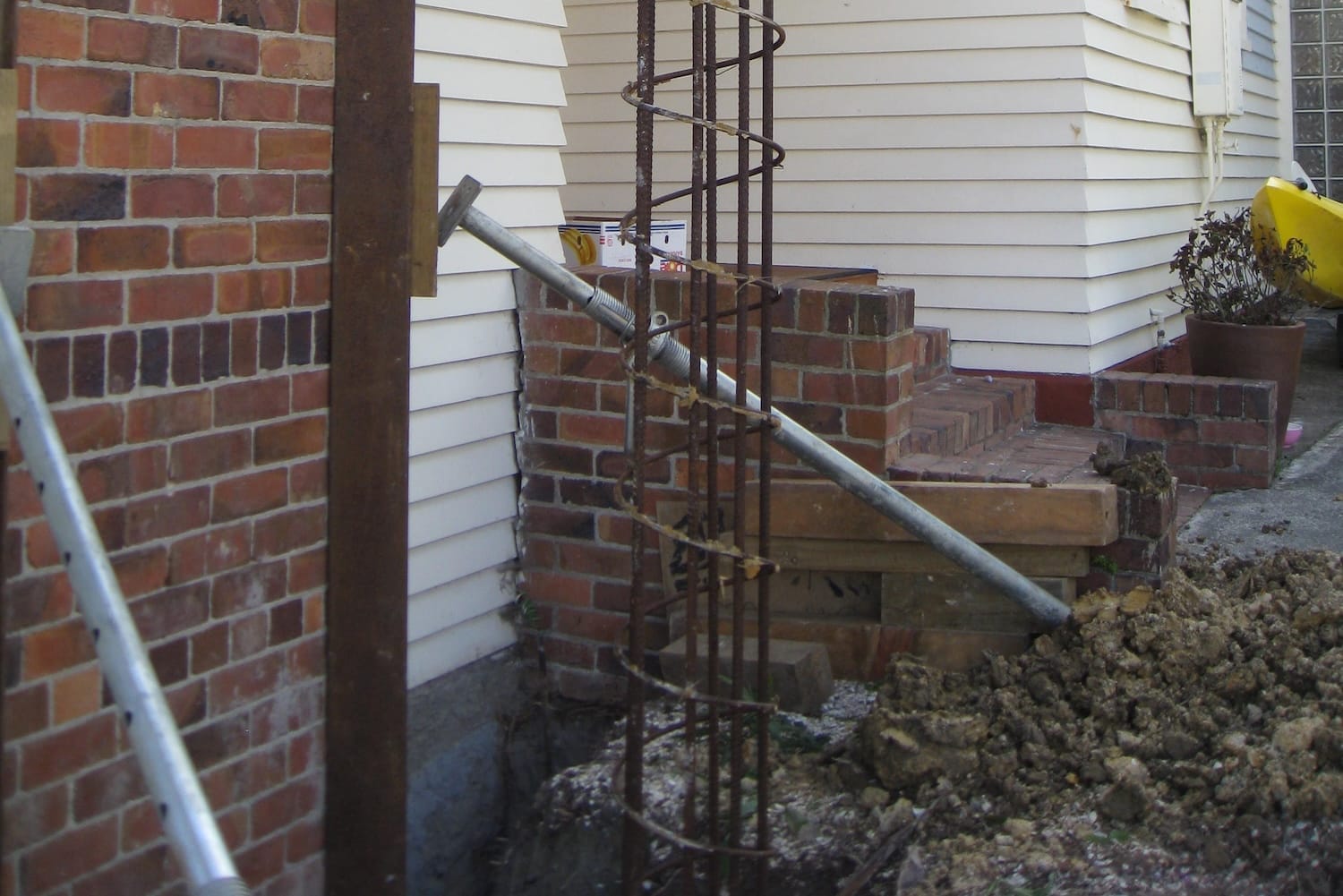
Cracks spreading across your walls? Doors that won’t close properly? These are signs that your property’s foundation may be moving. House underpinning in NZ uses friction piles to stabilise settling foundations and stop further structural damage. We use engineered steel beam systems that place less stress on your home during the process.
Ready to discuss your foundation concerns? Contact our team for a site assessment and a detailed quote.
Foundation problems don’t fix themselves. If you’ve noticed any of the following warning signs, it’s time to get a professional assessment.
- Cracks in walls, particularly step cracks following mortar lines in brick or concrete.
- Doors and windows that stick or won’t close properly.
- Uneven or sloping floors.
- Gaps are appearing between walls and ceilings.
- Visible movement or cracks in the foundation itself
Auckland’s reactive clay soils are a common culprit. These soils shrink during dry periods and expand when wet, creating constant movement beneath your home.
If you’re looking at underpinning an old house built before the 1990s, the original foundations are often undersized compared to modern standards, making them more vulnerable to soil movement.
What is Remedial Underpinning?
Underpinning is a process used to stabilise the ground beneath the property by distributing the load across a greater area. Underpinning is carried out where there are serious problems with soil movement.
How Underpinning House Foundation Works
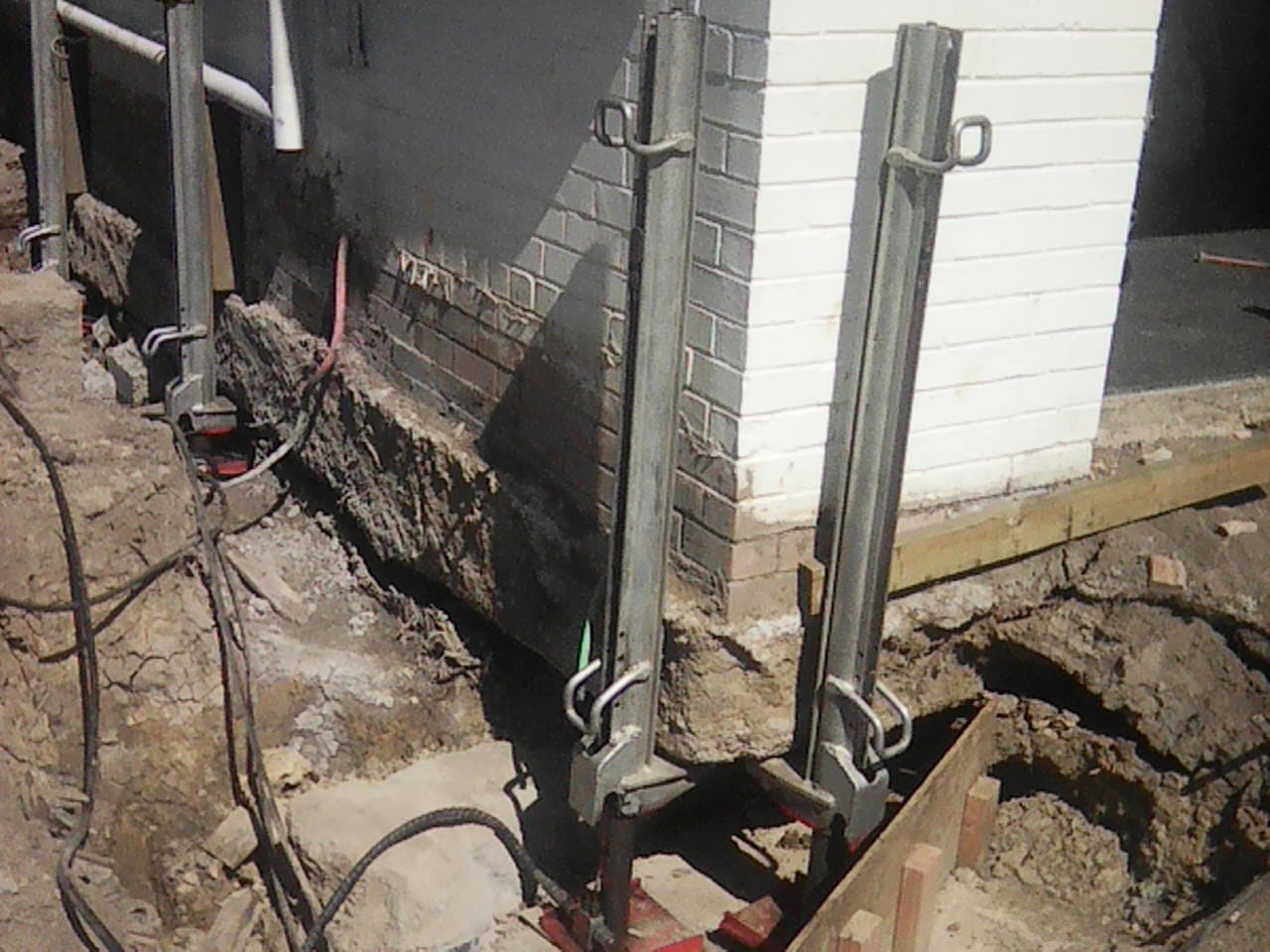
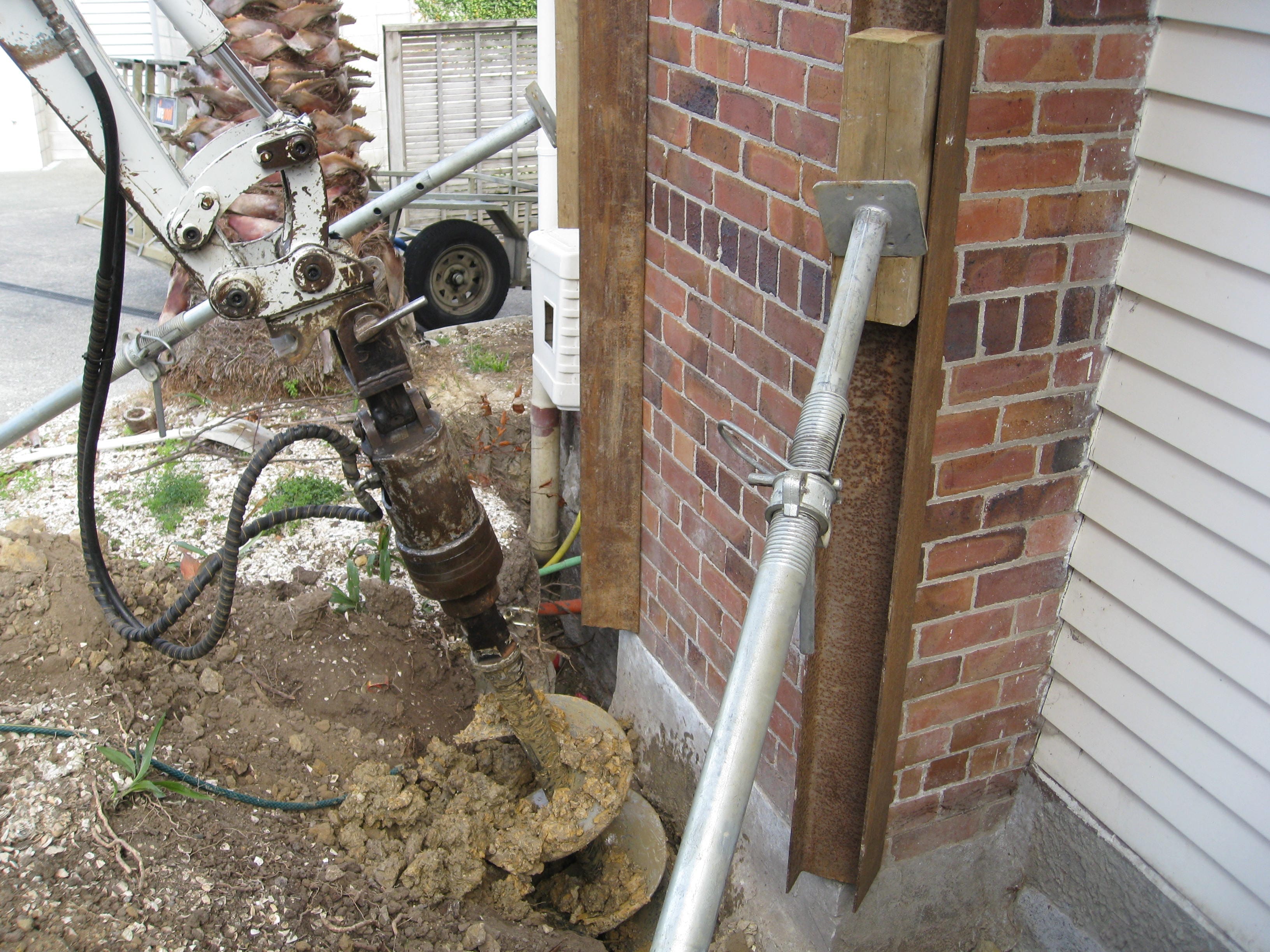
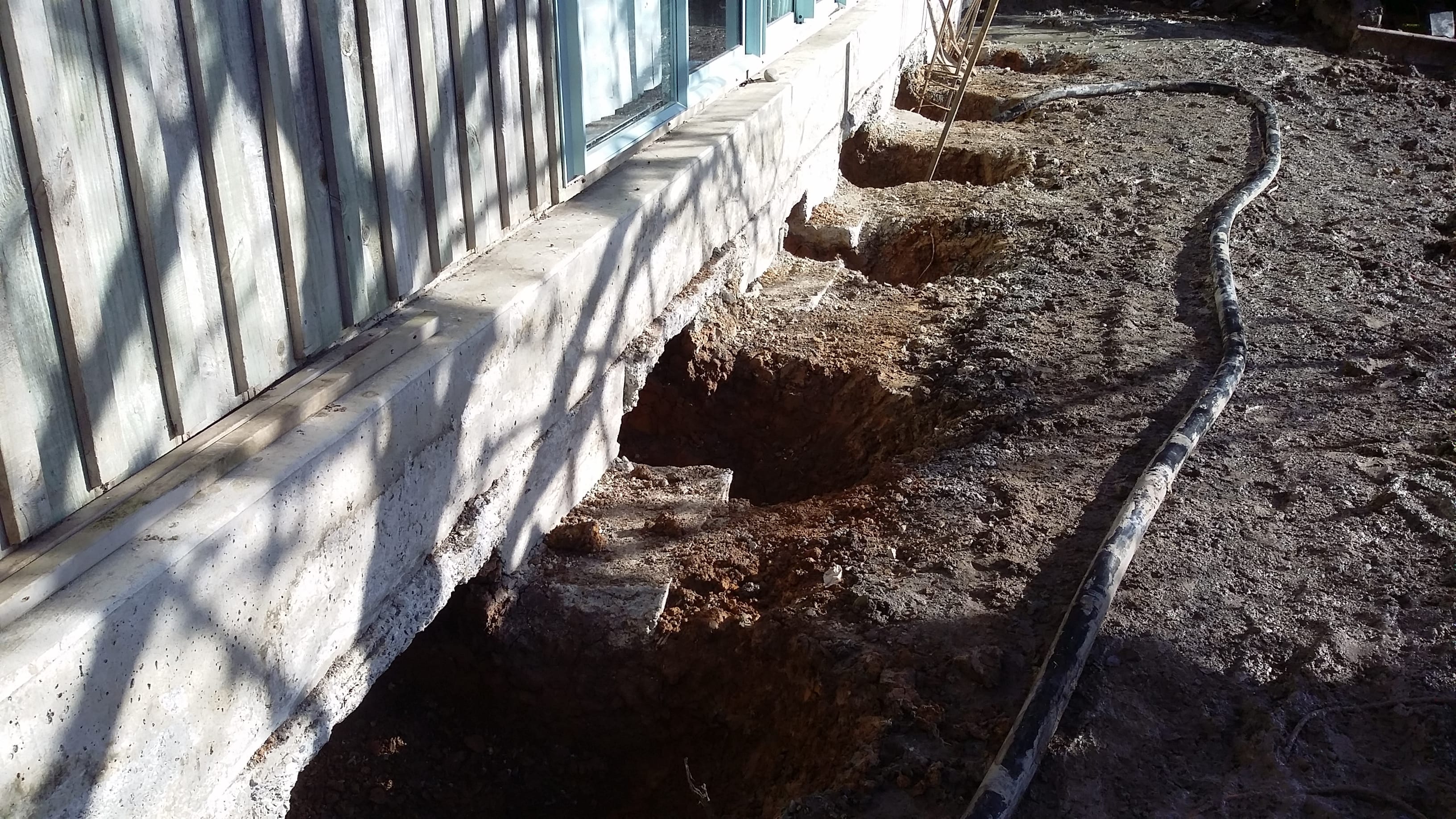
There are many methods for underpinning house foundations, but the most common is placing friction-type piles under the foundation wall. Holes are drilled beneath the existing footings of the external walls to a depth, width, and spacing determined by an engineer.
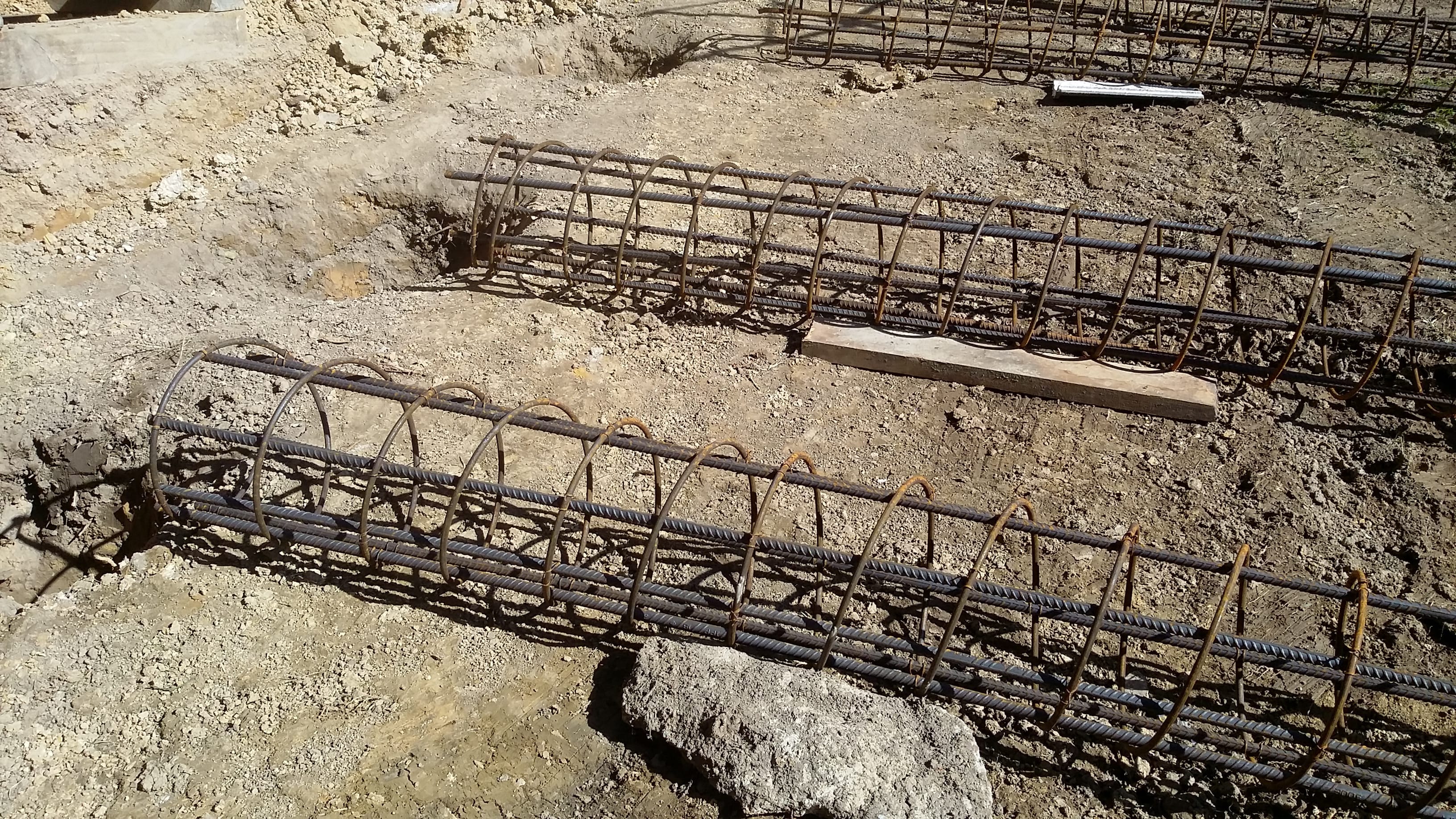
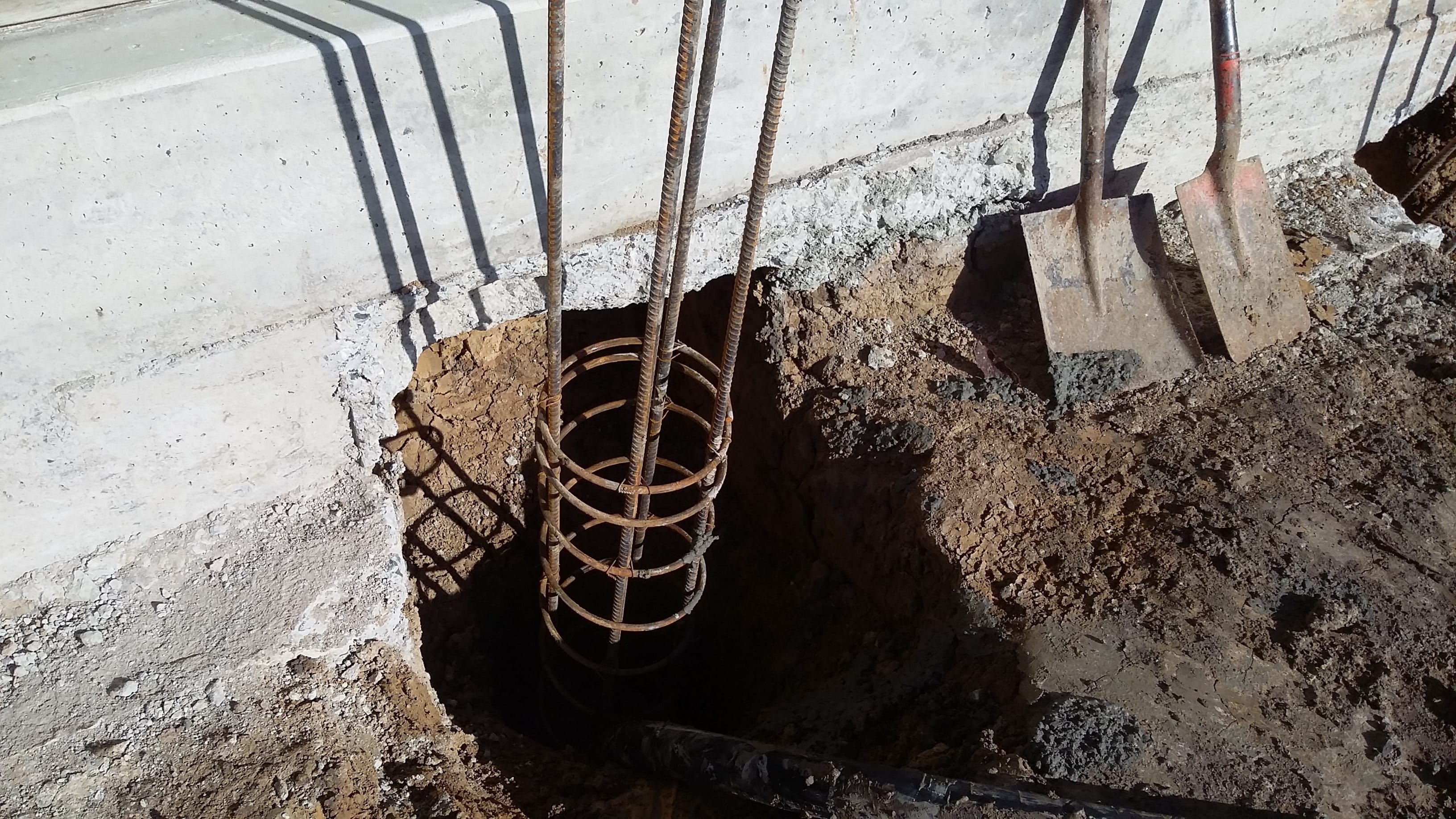
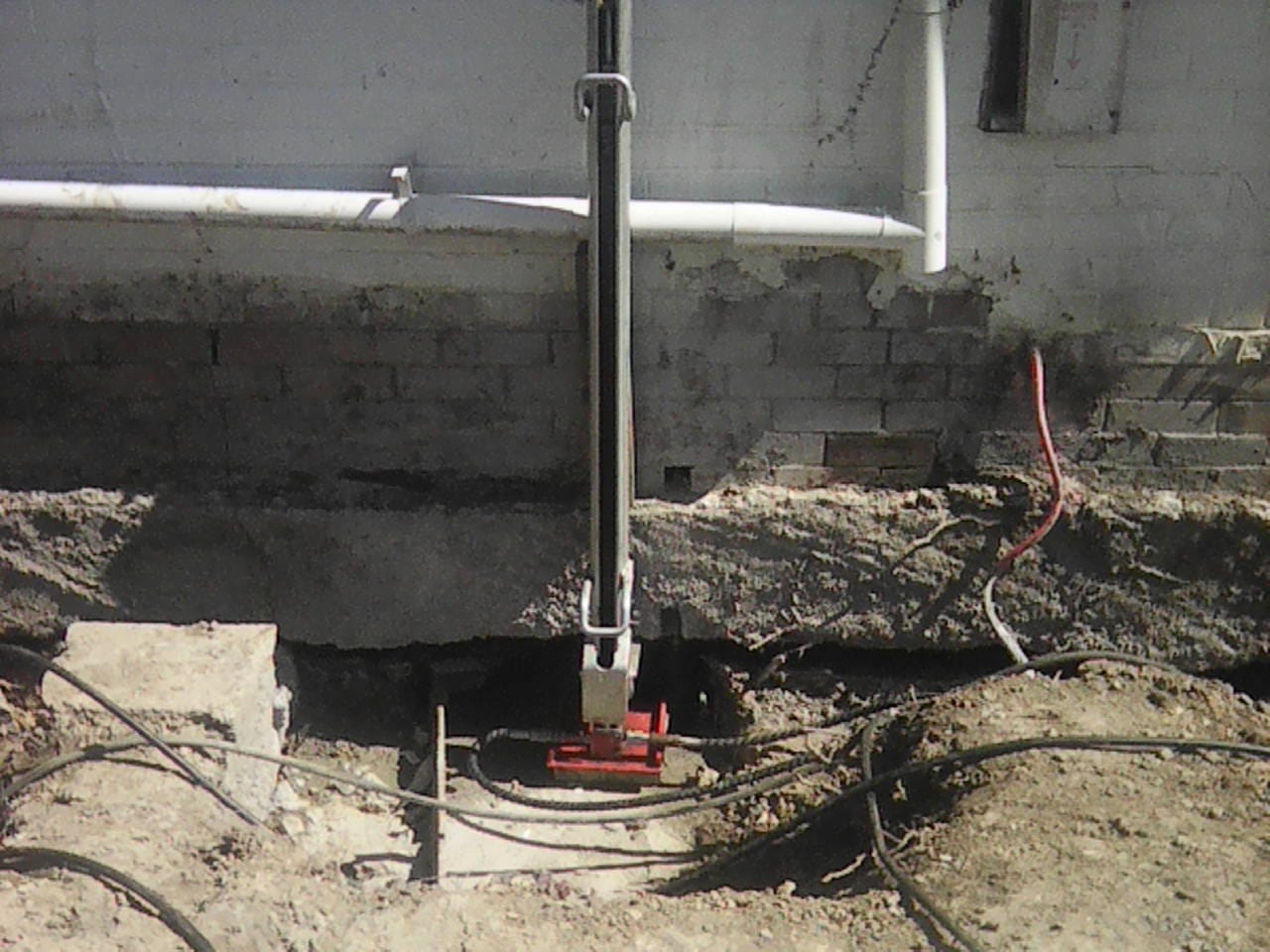
The footing and top structure are hydraulically jacked up to level. At this point, spiral reinforced steel pile cages are installed into the holes, and the engineered spiral reinforced cages are then filled with concrete.
This creates permanent support that transfers your home’s weight to stable ground below the problematic soil. Not every property is suitable for this method—that’s why we assess each site before recommending a solution.
Related Foundation Services
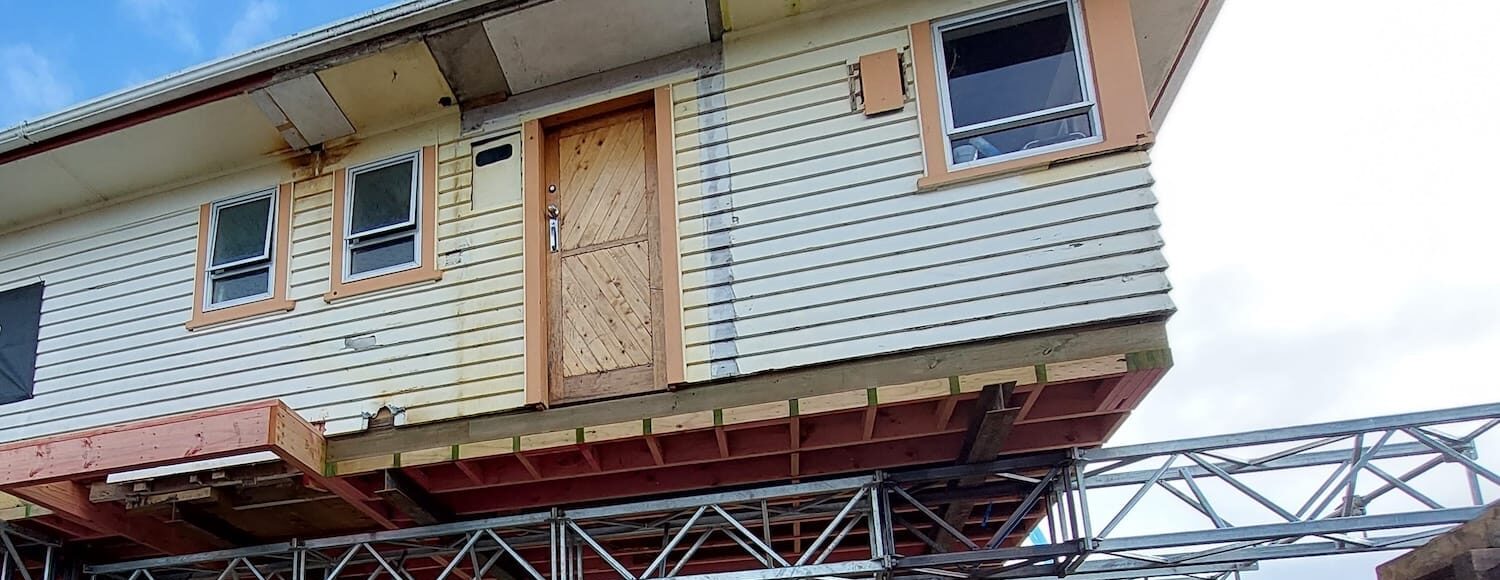
Underpinning often connects with other foundation work. If your project requires raising the building for basement conversions or flood protection, our house foundation lifting service can elevate your property up to 3 metres.
For projects needing support while builders work beneath, our temporary propping contractors can maintain stability throughout construction. Our team services the entire Auckland region; we offer house lifting in Grey Lynn and have experienced house lifters in South Auckland and throughout the area.
Frequently Asked Questions
Most residential projects for underpinning an old house typically take 1-3 weeks, depending on the number of piles required and site access. We’ll provide a timeline based on your property after our initial assessment.
Yes—underpinning house foundations requires building consent in New Zealand as it affects the structural performance. You’ll also need engineering design and inspection. House Lifting NZ Ltd can guide you through the consent process and work with your engineer.
In most cases, yes. Our approach to house underpinning in Auckland and surrounding regions utilises steel beam support systems to maintain the structure’s stability and level throughout the work. We can discuss any specific requirements during the site assessment.
Get Your Underpinning Quote Today
Every foundation is different. Section access, soil conditions, and the extent of movement all affect how we approach your project. Our team will visit your site, assess the damage, and provide a detailed quote based on what’s actually needed.
Contact our team for house underpinning in NZ—we’ll assess your needs and provide a no-obligation quote.